Kashmir · Seasonal guides
Best time to visit Kashmir: what each season is really like
The best time to visit Kashmir, season by season: spring tulips, green summers, autumn chinars and winter snow, with real temperatures and each season's catch.
Which month is best for a Kashmir trip?
The best time to visit Kashmir depends on what you're coming for: late March and April for blossom and tulips, June to August for green meadows and the high valleys, October and early November for chinar colour and settled weather, and mid-January to February for snow. Every season has a catch as well, and we'll be straight with you about those.
In brief, using India Meteorological Department (IMD) averages for Srinagar from 1991 to 2020, the year runs like this:
- March: almond blossom, then the Tulip Garden; cool and showery in the city (16°C by day), snow still up in Gulmarg.
- April and May: spring at full strength, with days of about 21–25°C; April brings a fair amount of rain.
- June to August: peak season. Warm days in Srinagar (28–30°C), cooler ones up in Gulmarg, and the busiest roads and hotels.
- September and October: dry, settled weather (October is Srinagar's driest month), apples ripening and the chinars starting to turn.
- November: chinars, cold nights and short days.
- December to February: winter. Snow is most likely from late December to February, and January is the coldest month.
Spring (March to May): tulips, blossom and changeable weather
Spring is Srinagar's season. Days warm from about 16°C in March to 25°C in May, and nights from about 4°C to 11°C. The almond garden at Badamwari, below Hari Parbat, flowers first, in March. The Tulip Garden on the Zabarwan foothills, beside Dal Lake, follows.
If you're coming for the tulips, know that their dates move from year to year. The garden usually opens in the last week of March, but in 2026 it opened on 16 March, about ten days early, after a warm February. More than 1.8 million bulbs of over 70 varieties were planted that season. Hold off on non-refundable bookings until the opening is announced.
Rain is the downside. March is Srinagar's wettest month (about 105 mm) and April isn't far behind (about 92 mm), so pack a light waterproof and leave a slow day spare. Up in Gulmarg, March still averages about 5°C by day and usually holds its snow, so a late-March trip can give you blossom in Srinagar and snow in the mountains in the same week.
Summer (June to August): green valleys and the busiest roads
Summer is peak season, and it earns it. Srinagar averages 28–30°C by day from June to August, Gulmarg about 21°C in July, and the high meadows are green. The days are long, with the sun setting after 7:30 pm in June. This is the time for full days out in Pahalgam, Sonamarg and Gulmarg, and for trekking and houseboats, both of which the Srinagar district administration lists among summer's draws. In July and August, lotus flowers bloom in Dal Lake's floating gardens.
Summer also opens the places winter shuts. The Thajiwas glacier walk above Sonamarg, closed through the cold months, reopens from spring. Gurez, a valley in the far north reached over the Razdan Pass, is a summer trip, since snow closes the pass in winter.
Crowds and the yatra are summer's problems. The district administration calls April to October the peak season and advises booking flights well ahead. The Amarnath Yatra also runs through high summer (3 July to 28 August in 2026), with pilgrims travelling through Pahalgam and through Baltal, 15 km from Sonamarg. Ask your operator how the yatra affects your dates and day trips before you book.
Autumn (September to November): chinars, apples and settled weather
Autumn gets less attention than spring, but it's the most settled season. October is Srinagar's driest month, with about 22 mm of rain on average, and September (about 37 mm) is the driest of the warm months. Days are warm in September (about 28°C) and pleasant in October (23°C), while nights drop quickly, from 13°C in September to 6°C in October and about 1°C in November. By November the mornings are close to freezing and the sun sets around 5:30 pm, which suits photographs and slow walks around Srinagar better than long days in the mountains.
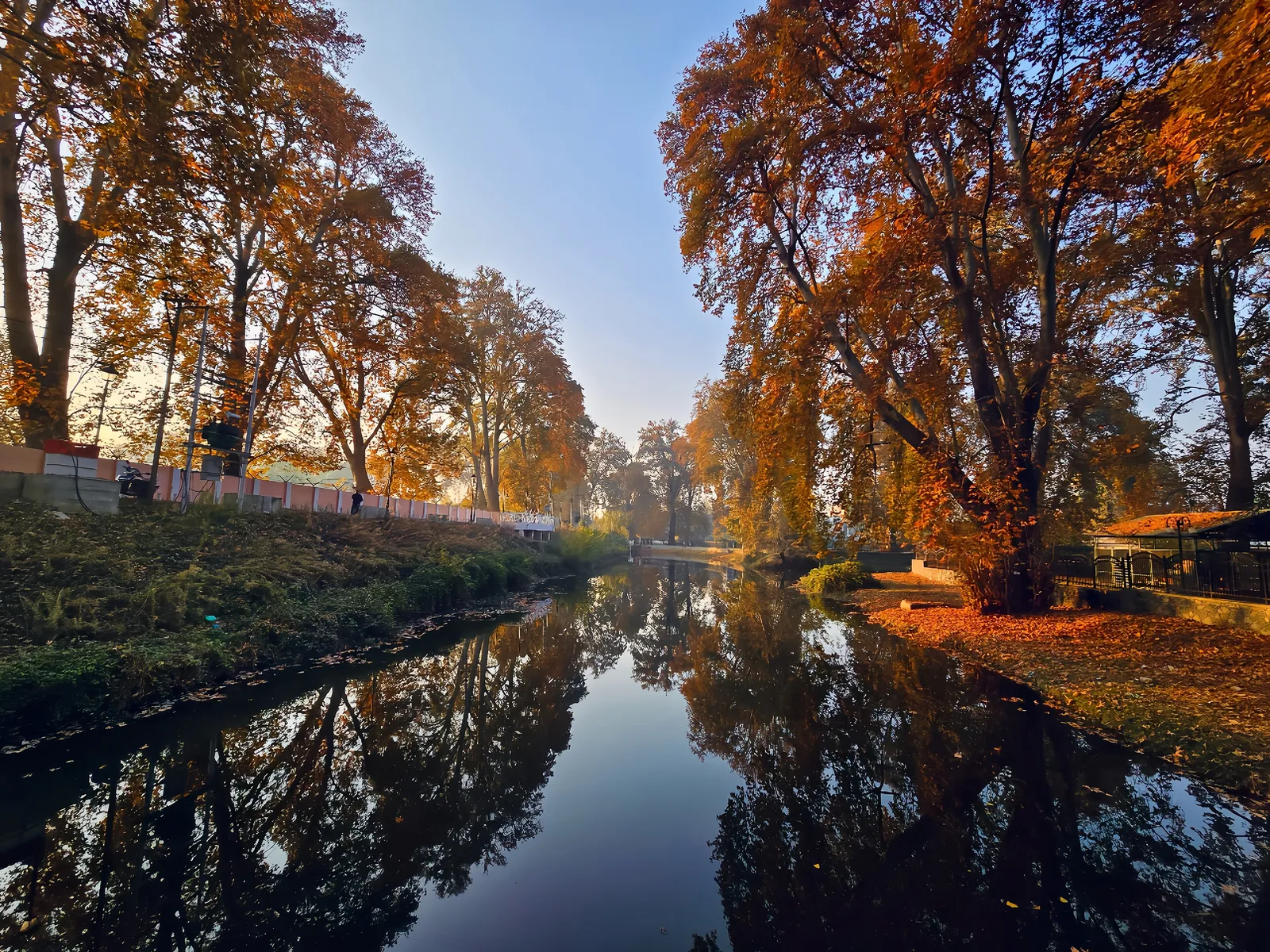
The chinars are autumn's show. The big plane trees in the Mughal gardens and around the Dal turn red and gold in October and November. It's apple season too: in Shopian, known as Kashmir's apple bowl, picking usually runs from early September through November.
Winter (December to February): snow, if it comes
Come in winter for the snow, with your eyes open. Snow is most likely from late December to February, and Gulmarg is the safest bet. Srinagar averages 7°C by day and −2°C at night in January, and Gulmarg about −8°C at night.
Every winter since 2019-20 has ended with less rain and snow than normal, and 2025-26 fell 65% short, so no month can promise white ground on your dates. Short days and freezing nights come with the season, and so do weather delays: fog can hold up morning flights, and heavy snow can shut the airport or the highway for a day.
Winter has its own breakfast as well. Harisa, minced meat slow-cooked with rice and spices through the night, is ready in Srinagar's harisa shops by the dawn prayer, and it was once sold only in Rajouri Kadal and Ali Kadal in the old city.
We've written a month-by-month guide to Kashmir in winter covering November to March, including the snow odds for each month and what is closed this season.
What's the best time for snow, a honeymoon or a family trip?
If snow is the point of the trip, aim for mid-January to late February and spend at least one night in Gulmarg. A day trip gives you a few hours in it; a night gives you the evening and the morning.
Honeymooners can choose by what they'd like to do together. Spring and summer give long days outdoors and warm evenings on a houseboat. Winter gives you snow; if you'd rather skip the crowds, avoid the Christmas and New Year week, when Gulmarg's hotels fill up.
Families with young children or older parents do well in April to June, or in September and October. Days in Srinagar are mild, about 21–29°C, nights are cool rather than freezing, and you avoid winter's snow-chain rules on the mountain roads.
How should you choose your dates?
Start with the one thing you'd hate to miss, then work backwards. If it's the tulips, wait for the opening announcement. Snow means mid-January to February, and accepting that a day may need swapping. A calm Srinagar stay works in any season, though the summer peak and the Christmas–New Year week need booking early.
Then fit the route to the days you have. Our six-day Kashmir itinerary shows what fits comfortably in winter and how the plan changes in summer. For a first winter trip, Kashmir Winter Essentials covers Gulmarg, Pahalgam and Sonamarg as day trips from one hotel in Srinagar.
Questions before you book
Which month is best for a Kashmir trip?
April for spring gardens, June to August for the green high valleys, October for chinars and dry weather, and January or February for snow. Pick the month that fits the trip you want.
When do the tulips bloom in Srinagar?
The Tulip Garden usually opens in the last week of March; in 2026 it opened early, on 16 March. Wait for that year's opening announcement before fixing your dates.
Is April a good time to visit Kashmir?
Yes, for gardens and mild days of about 21°C in Srinagar. Expect some rain, about 92 mm in an average April, and cold nights higher up in Gulmarg.
